Real Estate
Population ageing is reshaping demand for housing and care services. In this context, retirement real estate opens up an opportunity to align commercial objectives with older people’s wish to live independently, safely and in connection with others. Beyond meeting the need for care, this model is also aimed at older adults who wish to retain their independence, comfort and social connections.
According to the World Health Organization (WHO), by 2030 one in six people worldwide will be aged 60 or over; this group is expected to reach 2.1 billion by 2050. The number of people aged 80 and over is projected to triple between 2020 and 2050, reaching 426 million. This shift calls for housing, healthcare services and living environments to be adapted to better suit older people.
This shift is not merely a demographic challenge but also a considerable economic opportunity. As older people place ever greater value on quality of life, they are willing to spend more on health, care, travel and housing with services attached. In many developed countries, retirement real estate has become a distinct asset class worth hundreds of billions of US dollars, attracting the interest of investment funds, insurers and real estate groups.
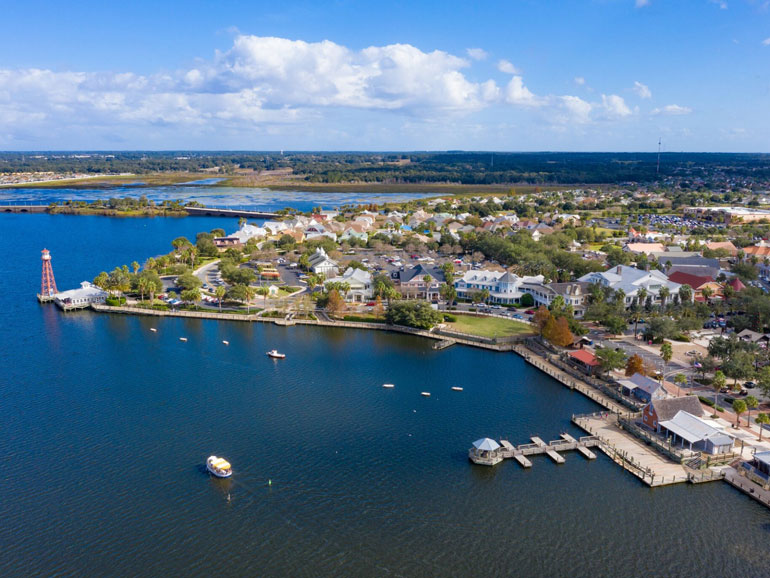
In the United States, The Villages in Florida is a prime example. With more than 150,000 residents, thousands of clubs and social activities, golf courses, swimming pools, theatres and medical centres, The Villages shows that “retirement” does not mean “slowing down”, but rather a stage of life that is active, connected and fulfilling.
In New Zealand and Australia, Ryman Healthcare has built a network of retirement communities offering a continuum of care (from independent living and assisted living to nursing care) with occupancy of close to 95%. In Singapore, meanwhile, Kampung Admiralty, a complex combining seniors’ housing, a medical clinic, a park and a food centre, won a global award from the Urban Land Institute and has become a symbol of “multi-generational” and “multi-tiered service” planning in a dense urban setting.
Europe, too, is seeing a strong wave of investment. In the United Kingdom, Audley Group and Elysian have recently merged to create the country’s largest retirement village operator, with more than 30 schemes and sales value exceeding GBP 3 billion. In China, Taikang Group and China Life have invested in a series of retirement communities integrated with hospitals and rehabilitation centres, targeting a fast-growing middle class. In Japan, where people over 65 already make up more than 29% of the population, the CCRC (Continuing Care Retirement Community: a retirement community offering successive levels of care) model has become part of the national healthcare system.
These models show that demand for housing combined with care services and community life is opening up a notable avenue of growth for the real estate market.
Vietnam is currently undergoing a rapid transition. According to United Nations and World Bank data, by mid-2025 people aged 65 and over accounted for approximately 9.05% of the total population, or more than 9 million of over 101.6 million inhabitants.
UNFPA projects that Vietnam will reach the threshold of an “aged society” (in which those aged 65 and over make up more than 14% of the population) around 2036–2039. This makes Vietnam one of the fastest-ageing countries in Asia, with average life expectancy now above 73 and the birth rate falling sharply. The transition is taking place as the “three-generation household” shrinks under the pressure of urban migration, leaving older people increasingly living independently. This opens up a new market: older people who wish to live in a green, safe environment with medical support close at hand, while retaining their autonomy and the pleasure of social connection.
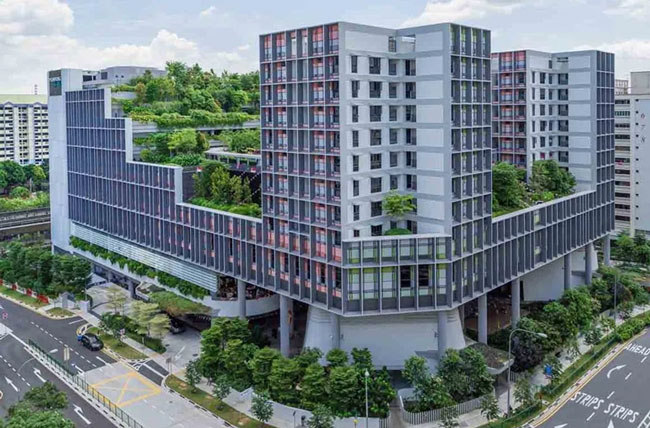
Drawing on international experience, Vietnam can develop this model sustainably, step by step. The first step is “active 55+” communities near major cities, for residents who are still in good health and enjoy socialising and staying active. These projects should focus on age-friendly design for all: step-free access, handrails along corridors, non-slip flooring, natural light and emergency alert systems. Alongside these come everyday amenities such as walking paths, a therapeutic gym, a heated swimming pool, a meditation room, a library and a community café, places where residents can meet, learn and enjoy life.
Once this model has taken shape and matured, the next stage will be housing with day care or residential care services, integrating geriatric clinics, rehabilitation and memory care. This will bring together real estate companies, private healthcare providers and health insurers. The most advanced stage is the CCRC model, a self-contained retirement community in which residents can live out their lives without having to move elsewhere. They begin in independent living, then move to assisted living or nursing care as needed. This model requires substantial capital investment, in-depth healthcare management capability and the ability to organise appropriate levels of care. Its financial performance also depends on actual demand, occupancy and the quality of operations.
Whereas two decades ago housing was simply a place to live, retirement projects around the world have now shown that “living well, living joyfully, living purposefully” is the core value of modern later life. Today’s retirees do not wish to live in a quiet care home; they want a community full of energy, where they can stay active, learn, create and contribute.
With its population ageing rapidly, Vietnam should move early to classify retirement real estate as “social infrastructure” (on a par with schools and hospitals) so that it qualifies for land, tax and credit incentives. In addition, the State could encourage public–private partnership (PPP) models for day care centres, rehabilitation centres or clusters of housing combined with healthcare. A partially refundable deposit mechanism (along the lines of the RAD model in Australia) should also be considered, helping investors balance their cash flow and ease the burden of operating costs.
In Vietnam, retirement real estate remains a model in the making. Some real estate companies have announced strategies to integrate retirement real estate systematically into large-scale townships or mixed-use developments, but it will be several years before a project is genuinely in operation. A few resorts have experimented with this direction, focusing on “wellness living” or a “second home for retirement”, but most have not yet gone beyond short-stay leisure tourism. What is still missing is a professional care system, integrated medical pathways and design tailored specifically to older people. This is precisely the market gap that real estate groups with vision can address.
From a financial perspective, retirement real estate has the potential to generate long-term revenue, provided the service model matches residents’ means and needs. From a social perspective, it helps address the challenge of population ageing, eases the burden on public healthcare, creates jobs for care and medical staff and enhances corporate reputation. And from a human perspective, it is an opportunity for Vietnam’s generation of real estate developers to create places of real meaning, where people can rediscover peace, connection and joy in the final chapter of life’s journey.
As the economy develops and expectations of quality of life evolve, retirement communities may become a housing option worth considering in Vietnam. The long-term value of this model must be built on the quality of care, the autonomy of residents and the capacity for sustainable operation.