Real Estate

As Vietnam sustains its strong economic momentum, the need for sustainable infrastructure is becoming ever more pressing. Hospitality and real estate, dynamic sectors, yet intensive in their use of resources, now face a stronger imperative than ever to “go green”. In the face of climate change, the pressures of urbanisation and shifting investor priorities, green investment increasingly shapes a project’s ability to raise capital, its competitiveness and its appeal. Project development thinking no longer stops at short-term economic returns; it now extends to the management of environmental and social risks and to the conditions for sustainable operation over the long term.
Investing in green buildings offers developers a number of clear advantages. Buildings designed to energy-efficient, environmentally responsible and operationally efficient standards generally carry lower maintenance costs, achieve higher utilisation and show stronger potential for capital appreciation over the medium term than conventional buildings. Against a backdrop of rapid urbanisation and an increasingly complex climate picture in Vietnam, international investors, institutional funds and end buyers alike are giving priority to projects that demonstrate a clear commitment to the environment, public health and climate resilience.
International financial institutions such as the IFC and ADB, together with major banks, are now applying credit standards tied to ESG criteria with growing rigour. For real estate projects, certifications such as EDGE, LEED, LOTUS or Green Mark can support the assessment of a project’s sustainability. Access to concessional loans, interest rates and the terms of green bond issuance nonetheless remain subject to the criteria of each programme and each capital provider.
Meanwhile, global hotel brands have also embedded ESG within their brand standards, requiring hotel owners to demonstrate their capacity to develop and operate sustainably from the moment the management agreement is signed. Developing a project to green standards calls for ESG to be integrated from the very conception of the idea. If the master plan, the choice of materials, the MEP design and the operating approach are not aligned with the environmental strategy from the outset, later adjustments will be costly and will erode the efficiency of the capital invested. The ideal development model is one in which the hotel owner adopts an integrated design process, with architects, MEP engineers, environmental specialists, the operator and the financiers involved from the start.
Drawing on a whole-life assessment of the building, the hotel owner can make intelligent design decisions, optimise the initial capital outlay and reduce long-term operating costs. A project seeking green certification needs a transparent operating plan, a mechanism for measuring emissions and effective resource management. A smart building management system (BMS), accurate energy metering, and data on water consumption and emissions are the tools that help measure and evidence operational performance to investors and lenders. In hospitality, operations play a decisive role in sustaining ESG performance. However green the standards to which a hotel is built, without an operating team that understands them and has the skills to monitor them, its environmental commitments will be difficult to uphold in practice.
In Vietnam, although green investment is gathering pace, a number of distinctive barriers remain. One of the greatest challenges is that the initial capital outlay is typically 5 to 8% higher than for conventional buildings. This deters many developers, particularly on projects geared towards short-term returns or without access to long-term capital. The domestic green supply chain is also limited. Many energy-efficient materials, high-end environmentally friendly equipment and automated control technologies must still be imported, at high cost and with long lead times.
A further challenge lies in operational talent. Vietnam does not yet have many building and hotel management firms with in-depth expertise in operating green buildings, monitoring emissions or preparing ESG reports to international standards. The shortage of green building consultants and operating engineers means that some buildings, though certified, fail to sustain their actual environmental performance over their working life.
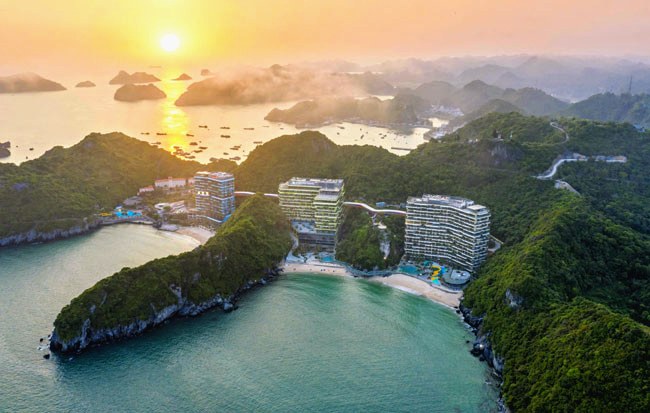
Despite these difficulties, the opportunities for developers with a clear strategy are considerable. Coastal resorts, long-stay serviced apartments and premium office buildings are the segments with the clearest potential for transition to a green investment model. Resorts that draw on their natural landscape, use local materials and integrate energy-saving technology can enhance their brand value and attract high-end travellers. Meanwhile, office occupiers, FDI enterprises and international organisations, are giving priority to environmentally certified workspace in line with their global policies.
To encourage green investment effectively, state policy must also become more proactive and more substantive. A green taxonomy designed specifically for the Vietnamese market would provide the basis for preventing “greenwashing” and for harmonising the standards for access to green finance among banks, developers and financial institutions. At the same time, mechanisms such as land tax incentives, reduced or waived licensing fees, and a shorter construction permitting process for green-certified projects should be implemented clearly and transparently. In the longer term, requiring listed real estate and hospitality companies to publish regular ESG reports would place positive pressure on the market and drive the entire sector towards sustainable development.
In short, green investment in Vietnam’s real estate and hospitality sectors is becoming an increasingly important element of competitive strategy in an era of globalisation and climate change. With the right development direction, an integrated design mindset, the ability to mobilise green capital and the capacity to operate sustainably, developers are well placed to turn ESG from a cost into a core source of value, and from a challenge into a long-term advantage. Integrating these objectives from the development stage helps to limit the cost of later adjustments.