

Tourism

When the first monsoon winds stir the pines of Da Lat, or the central sun blazes across the white sands of Nha Trang, Vietnam’s tourism industry enters a new season of journeys, experiences and emotion. Behind every well-rounded trip, though, lies a quiet factor that few people notice and that shapes everything: the weather. In travel, the weather is far more than a backdrop for a beautiful photograph. It shapes every plan, from where travellers choose to go and how tour operators build their itineraries to how resorts run and serve their guests. Weather forecasting is therefore no longer simply a bulletin; it has become a strategic tool for the management, operation and sustainable development of tourism.
Where tourism professionals once simply watched the television forecast to adjust their plans, weather data has now become the “white gold” of the service industry. Worldwide, weather forecasting is a market worth billions of US dollars. Major providers such as The Weather Company, AccuWeather and DTN have commercialised meteorological data for travel, aviation, energy and logistics, so that travellers can learn early whether a storm is likely to reach Bali, or whether the Alps will be clear at the weekend.
Artificial intelligence and machine learning are revolutionising the field. AI models can process billions of data points from satellites, radar, sensors and weather stations to forecast rain, storms, wind and solar radiation hour by hour and place by place. The forecast is no longer “sunny tomorrow” but a detailed map: light rain in the morning, cloud at midday, strong wind in the afternoon, with probabilities, confidence levels and recommended actions. Thanks to technology, the weather has turned from an unknown of nature into data that can be measured, predicted and used, helping travel worldwide stay ahead of a changing climate.
Vietnam stretches more than 1,650 km from Ha Giang to Ca Mau, with a tropical monsoon climate that varies from region to region. That diversity gives its tourism a beauty in every season, from the mists of Sapa and the sunshine of Phu Quoc to the sea breezes of Quy Nhon. It also leaves the industry exposed to extreme weather: storms and floods in the centre, heat in the south, persistent rain in the north and flash floods in the mountains.
According to the Ministry of Natural Resources and Environment, natural disasters cost Vietnam tens of trillions of dong each year, most of it from storms and flooding. These losses affect not only farming and infrastructure but also tourism and hospitality, which depend heavily on the weather. Applying meteorological data and accurate forecasting is therefore becoming essential to any strategy for sustainable tourism.
Today a resort or luxury hotel cares not only about its amenities, service and setting, but also about its guests’ “weather experience”. Accurate forecasts help it plan sensibly: scheduling festivals, holding events outdoors, arranging safe transfers in stormy weather and preparing back-up power for high winds.
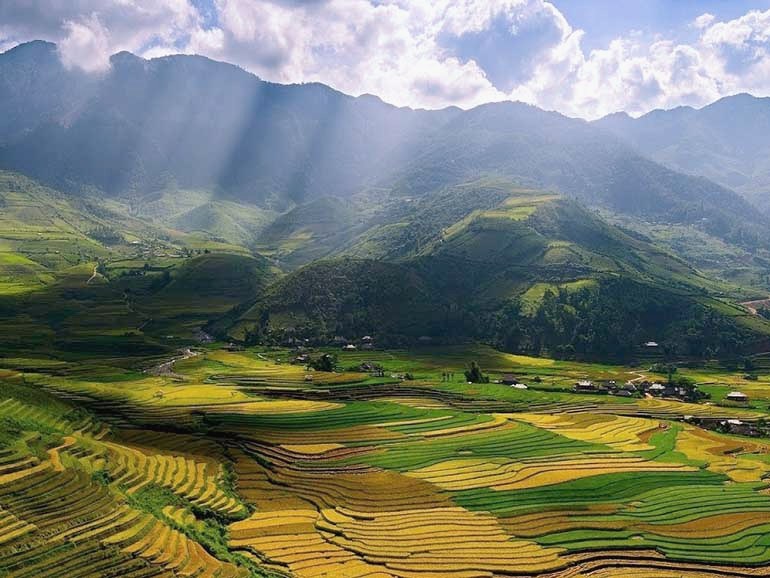
At destination level, forecast data helps local tourism authorities issue early warnings, advise tour operators to change routes, or postpone events when conditions are poor. In eco-tourism, rainfall and temperature maps help guides adjust their routes and keep guests safe in forests, in the mountains and in caves. At a finer level, resorts, particularly on the coast, have begun to use weather data to fine-tune operations: controlling humidity in rooms, forecasting energy use and timing maintenance of pools and golf courses around the rain and sun. Once simply a fact of nature, the weather is now part of the smart operating strategy of hotels and tourism.
Vietnam too has pioneers in forecasting and meteorological data, notably WeatherPlus Weather Solutions JSC. With a mission “to help people stay ahead of nature”, WeatherPlus has built a network of sensors and weather-data collection systems across the country. Its stations feed an AI-based analysis platform that produces detailed forecasts area by area and hour by hour. What sets WeatherPlus apart is its ability to localise forecasts, something general-purpose apps struggle to offer at the level of individual destinations. Its data comes not only from satellites but also from sensors on the ground, so it can give detailed information for each destination: heavy rain in Sa Pa, fog in Tam Dao, strong wind on Cat Ba or high humidity in Hoi An.
WeatherPlus works with resorts and with energy and farming businesses to provide action-based forecasts: not simply “rain is expected”, but “postpone the event”, “move guests early” or “adjust solar output”. In tourism, such data is invaluable.
An effective forecasting system does more than help businesses avoid risk; it also adds value to the experience. A visitor to Phu Quoc can be warned of strong sun and pack sunscreen, or learn the exact time of that evening’s sunset, the perfect moment for a cocktail by the sea. In Da Lat, eco-tourism operators can reschedule pine-forest tours when dense morning fog is forecast. In Ha Long, cruise boats can plan safe moorings before the monsoon arrives. Each small decision, guided by data, adds up to a better experience, fuller and safer for travellers. That is the philosophy WeatherPlus pursues: helping tourism live with the weather rather than merely respond to it.

Climate change is no longer a distant idea. It is present in every rainy season that arrives early, every prolonged spell of heat and every coastline eroding faster than before. Tourism, an industry built on natural beauty, will be the first to feel it. Weather forecasting therefore not only helps tourism run more efficiently; it also supports the country’s sustainable development strategy. With accurate forecasts, Vietnam can plan its peak seasons sensibly, ease pressure on vulnerable areas, protect natural resources and make travel safer.
This is also the direction the Vietnam National Authority of Tourism is pursuing in its strategy for digital transformation and smart tourism. As meteorological technology is built into destination management, travel maps and mobile apps, every traveller can become a smart traveller, choosing the time, place and activity that suit the conditions.
From a sudden shower in Hoi An’s old town to a cloudless sky over Phu Quoc, every moment of weather helps shape the character of travel in Vietnam. The weather can change a journey, but with foresight it can also turn a trip into a memorable experience. Vietnam’s tourism industry has a great opportunity to bring together science, technology and the human experience. On that journey, companies such as WeatherPlus play an important role, quietly gathering data and analysing every gust of wind and every drop of rain so that millions of travellers can set off with peace of mind.
Weather forecasting, in the end, is not simply guessing rain or sun; it is the art of preparing for happy journeys. For when we understand the sky, we know how to enjoy every sunny day, and to smile through the rain as well.

